
How to compare multiple heat pump installation quotes
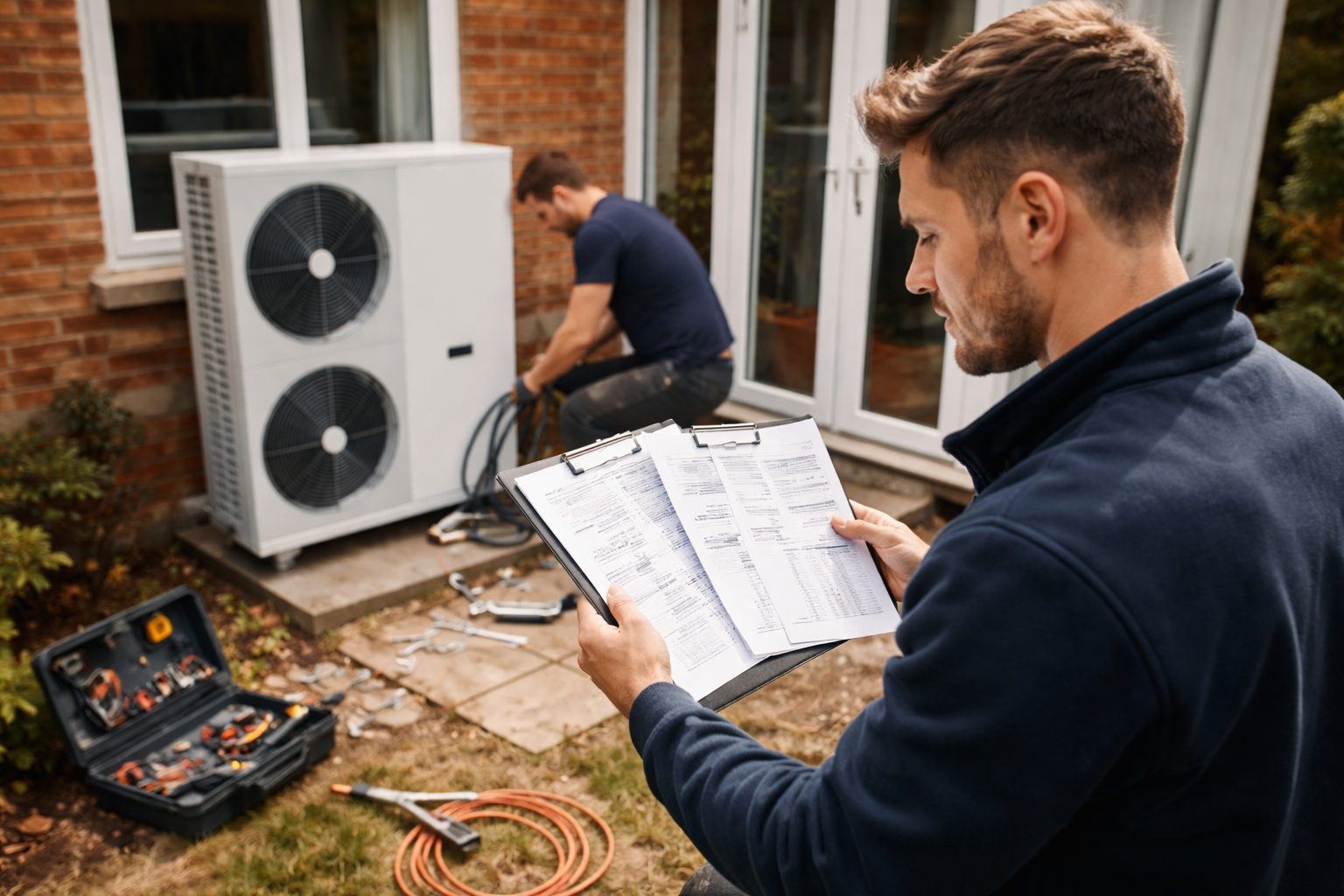
Get comparable quotes by checking scope, performance figures, warranties and running cost estimates, and expect typical installation price ranges to vary widely by system type and property. Use detailed checklists and ask installers for standardised estimates so you can compare like for like.
To compare multiple heat pump installation quotes effectively, insist on comparable scopes (equipment, controls, pipework, system testing), request performance figures such as COP or SCOP, and compare both upfront cost and realistic running-cost estimates — typical installations can range from a few thousand pounds to tens of thousands depending on system and property. A methodical checklist and a simple table of ranges will help you pick the quote that delivers best value over the long term.
1. Start by ensuring the quotes are directly comparable
Most apparent price differences come from differing scopes rather than better value. Before you compare numbers, check these elements are present and clearly described in each quote:
- Exact heat pump model and capacity (kW) or performance estimate (COP/SCOP)
- Scope of supply: indoor and outdoor units, cylinder or buffer tank, controls, thermostats
- Work included: removal of old system, refrigerant handling, insulation work, pipework, trenching or groundworks for ground source systems
- Commissioning, balancing and efficiency testing, and any air-tightness or system efficiency checks
- Timescales and payment schedule
- Warranties and service plans — what they cover and for how long
If any quote is vague on these points, ask the installer to reissue it with the missing detail. You cannot fairly compare a low-price estimate that omits essential items such as a buffer vessel or commissioning.
2. Compare technical performance, not just price
Two heat pumps with the same headline kW can perform very differently. Ask for:
- Seasonal performance figures (SCOP) or an explanation of expected seasonal efficiency; if unavailable, request estimated average COP under typical local conditions
- Expected flow temperatures and whether radiators or underfloor heating need upgrading
- Control strategy and compatibility with smart thermostats or existing heating controls
Also check whether the installer has proposed any complementary measures that affect performance — loft or cavity insulation, radiator upsizing, or additional controls. These measures change both upfront cost and long-term running costs, so include them in comparisons.
3. Typical price and time ranges — table to compare
The table below gives realistic ranges for different system types and typical influencing factors. These are indicative ranges to help you spot outliers; exact costs depend on property size, installation complexity and site-specific needs.
| System type | Typical installation price range (£) | Typical duration | Main factors causing variation |
|---|---|---|---|
| Air source heat pump | £6,000 to £18,000 | 2 to 5 days | Property size, need for radiator upgrades, extent of pipework, accessibility |
| Ground source heat pump | £12,000 to £40,000 | 1 to 3 weeks | Groundworks (horizontal vs boreholes), land area, geology, trenching required |
| Air-to-air heat pump | £3,000 to £8,000 | 1 to 3 days | Number of indoor units, mounting complexity, controls |
| Upgrades and complementary work | £500 to £8,000 | 1 day to 2 weeks | Insulation, radiator replacement, electrical upgrades, cylinder installation |
Variations come from site access, complexity of pipework and whether additional work such as insulation or electrical upgrades are required. For detail on air-source options see Air source heat pumps, and to understand borehole or ground loop implications see Ground source heat pumps.
4. Check warranties, aftercare and performance guarantees
A lower initial price may reflect shorter warranties, limited spare-part cover or minimal aftercare. When comparing quotes, note:
- Length and scope of parts and labour warranty, and whether extended warranties are available
- What constitutes routine maintenance, whether this is included for a period, and the cost of annual servicing
- Whether the installer offers a performance guarantee or monitoring that proves the system reaches expected efficiencies
- Availability of spare parts and typical lead times
Also ask about the installer’s accreditation and training — reputable installers follow recognised standards and may be listed on trade bodies. If you are considering smaller split systems, check options on Air-to-air heat pumps for quick comparisons.
Get up to 3 quotes from heat pump installers
Describe your project in a minute. Free, quick and with no obligation.
Request your quote through our platform
Our platform lists 42,621 heating engineers in 1,357 towns.
Compare local firms and get several quotes from a single request — free and with no obligation.
Get a quick quote
- Free and no obligation
- Quotes from installers who cover your area
- Check what grant your installer can claim
- You choose who to hire, if anyone
Thank you — we have received your request!
A local firm will contact you as soon as possible about your free, no-obligation quote.
Frequently asked questions
How many quotes should I get?
Aim for at least three quotes so you can spot outliers and common price bands; make sure each quote has the same scope so you compare like for like.
Should I pick the cheapest quote?
Not automatically. The cheapest may cut corners on equipment, commissioning or warranties. Choose the quote that gives the best combination of documented performance, full scope and a reasonable warranty.
Are there any grants or incentives to reduce cost?
Aids and incentives can exist but change frequently. Check official guidance for current eligibility and application routes — visit a reputable source such as Heat pump grants for direction on where to look next.
Practical checklist to use when comparing quotes
Use this quick checklist when reviewing each written quote; tick items that are included and request clarification for any blanks:
- Full equipment specification (brand/model/capacity)
- Detailed list of all works included and excluded
- Estimated annual running cost or comparative energy use (with assumptions clearly stated)
- Timescale and start date window
- Warranties and maintenance terms
- Commissioning and handover procedures, including user training
- Payment schedule and any retention amount until satisfactory commissioning
When you have completed the checklist for each quote, lay the quotes side by side and score them on the main criteria: technical fit, total cost, warranties and installer reliability. Prioritise system performance and correct installation over the lowest headline price.
Conclusion
Compare at least three detailed, like-for-like quotes, score them against a checklist of scope, performance and warranties, and choose the one offering the best long-term value rather than the cheapest upfront price. As a next step, ask each shortlisted installer for a clarified, itemised quote that matches the others so you can make a direct comparison.