
What qualifications should a heat pump installer have?
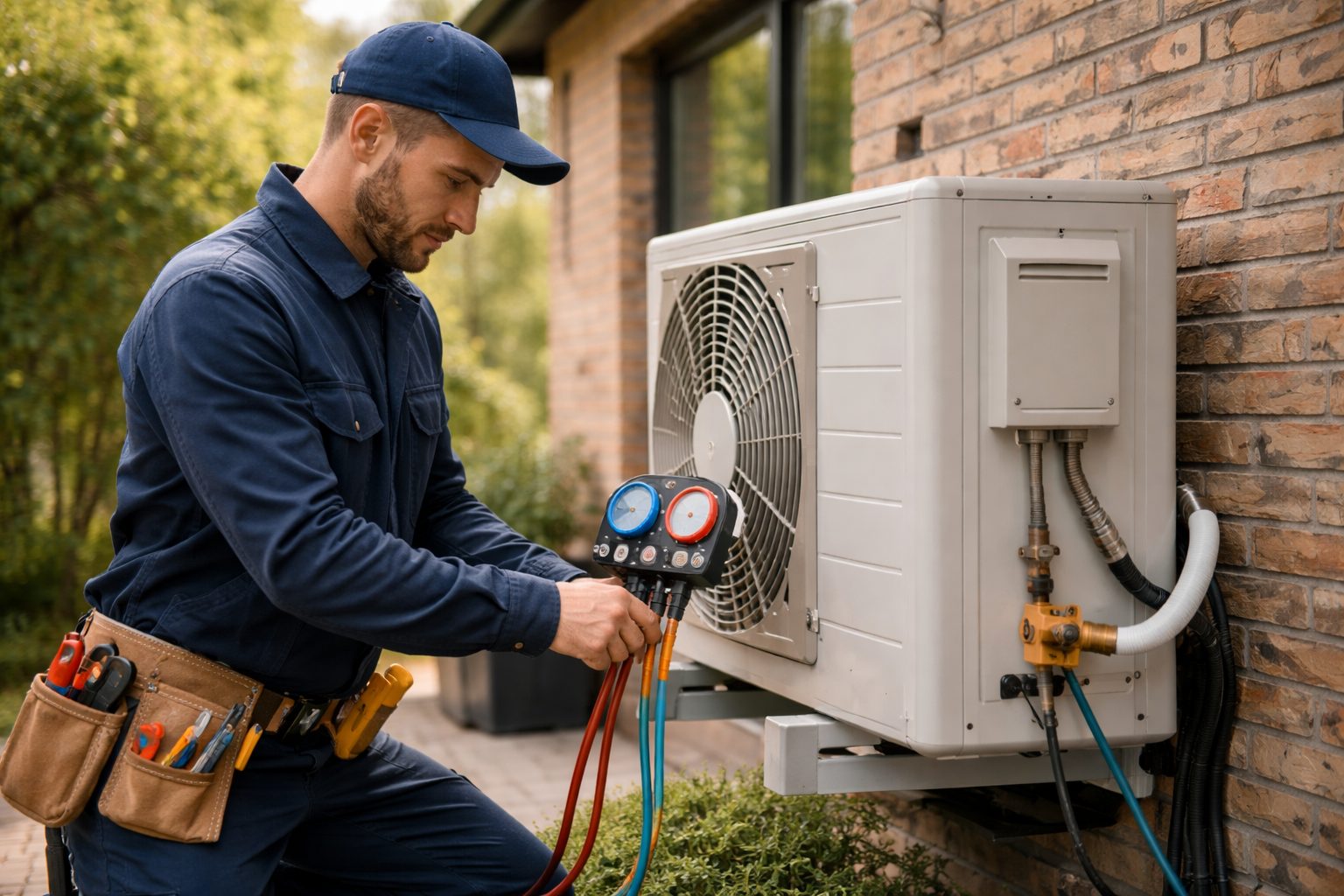
A qualified heat pump installer will hold recognised certifications, refrigerant handling qualifications and manufacturer-specific training, and normally charge from a few thousand to tens of thousands of pounds depending on system type. Check their credentials, insurance and recent references before you book.
A suitable installer should be certified under the Microgeneration Certification Scheme (MCS) or an equivalent recognised body, hold a valid refrigerant-handling qualification (commonly called F-gas certification) and have manufacturer-specific training for the model being fitted. Expect the most common installations to take between 1 and 7 days and to cost in the low thousands for small air-source systems up to much higher for ground-source systems—price varies with system type, house size and complexity.
Core qualifications and certificates to look for
Not all qualifications are equal. For heat pumps you should prioritise installers who have the following:
- MCS (Microgeneration Certification Scheme) or equivalent — this demonstrates competence across design, installation and commissioning for renewable heating systems.
- F-gas (refrigerant) certification — heat pumps contain refrigerant; installers must be authorised to handle pressurised refrigerants safely and legally.
- Electrical competence — as heat pumps are electrical appliances, the installer or their subcontracted electrician should be a registered electrician with appropriate wiring and consumer unit competency.
- Manufacturer training and accreditation — many manufacturers run product-specific courses. An installer trained and accredited by the manufacturer of your chosen heat pump can ensure correct setup and valid product warranties.
- Public liability and professional indemnity insurance — always request proof of insurance to cover any accidental damage or mistakes.
Ask to see certificates and confirm they are current; some qualifications require periodic reassessment or logged continuing professional development.
Practical experience, references and portfolio
Qualifications prove baseline competence, but practical experience matters. A good installer will:
- Provide a portfolio of recent installations similar to your home (size, system type and age).
- Supply contactable references or online reviews from recent customers.
- Show examples of system commissioning paperwork and handover materials they give to homeowners.
For specific system types, look for installers who regularly fit those systems. For air-source units, you can compare details on an Air source heat pumps page to make sure any quoted installer understands typical siting, performance and maintenance considerations.
What skills and services should an installer provide?
Beyond certificates, an installer should offer a complete service that covers:
- Heating demand assessment and system sizing — a proper survey that uses your home’s heat loss profile, not a one-size-fits-all approach.
- Design and controls advice — correct flow temperatures, buffer tanks, cylinder sizing and thermostatic control setup where relevant.
- Installation and commissioning — including leak testing, refrigerant charge, electrical connections and performance testing.
- User handover and documentation — operational guidance, maintenance schedule and warranty paperwork.
- Follow-up support or maintenance contracts — clear information about servicing and emergency contact.
Some installers will also design hybrid systems or adapt existing radiators and controls; others specialise in one type of heat pump only.
Typical costs and timescale (realistic ranges)
Costs and durations vary widely by system type, property size and how much adaptation your existing heating system needs. Below is a simple table with typical ranges and factors that influence them.
| Item | Typical range | Factors that make it higher or lower |
|---|---|---|
| Small air-source heat pump supply & installation | £3,000 to £9,000 | Property size, existing radiators or underfloor heating, ease of siting outdoor unit |
| Large air-source or complex air-to-air systems | £6,000 to £15,000 | Multiple indoor units, longer refrigerant runs, ducting work |
| Ground-source (horizontal/vertical loop) supply & installation | £12,000 to £30,000+ | Groundworks complexity, borehole vs horizontal trench, ground conditions |
| Typical installation duration | 1 to 7 days | Type of system, site access, additional plumbing or electrical work |
These ranges are illustrative. For bespoke advice and potential funding routes, an installer can point you toward official guidance; you can also check options on a page about Heat pump grants for where to look for up-to-date information.
Get up to 3 quotes from heat pump installers
Describe your project in a minute. Free, quick and with no obligation.
Request your quote through our platform
Our platform lists 42,621 heating engineers in 1,357 towns.
Compare local firms and get several quotes from a single request — free and with no obligation.
Get a quick quote
- Free and no obligation
- Quotes from installers who cover your area
- Check what grant your installer can claim
- You choose who to hire, if anyone
Thank you — we have received your request!
A local firm will contact you as soon as possible about your free, no-obligation quote.
How to verify an installer before you hire
Follow a short checklist when vetting quotes:
- Request to see their MCS certificate, F-gas card and proof of manufacturer training.
- Confirm insurance levels and ask whether their quote includes commissioning paperwork and warranty registration.
- Ask for a full written breakdown of costs, expected efficiencies and likely running costs under typical conditions.
- Check they can work with the system type you want; if you’re considering a ground-source unit, ensure the installer has completed similar groundworks or works with a specialist.
If you need information on different system types first, an Ground source heat pumps overview can help you frame questions for installers about site surveys and ground investigations.
Frequently asked questions
Do heat pump installers need to be registered to work on refrigerants?
Yes — anyone handling refrigerant must hold a recognised refrigerant-handling qualification. Always ask to see proof.
Is manufacturer-specific training essential?
It is strongly recommended. Manufacturer training ensures correct commissioning and can be a condition of product warranty.
Should the installer be accredited for grants or incentives?
Often installers need specific accreditation to process grant applications; ask the installer whether they can advise on or manage any application process.
Conclusion
Hire an MCS-accredited installer with F-gas certification, manufacturer training and adequate insurance. Practical experience and clear commissioning paperwork are equally important—get at least three detailed quotes and compare credentials, scope and aftercare before committing.