
Get an accurate heat pump installation quote
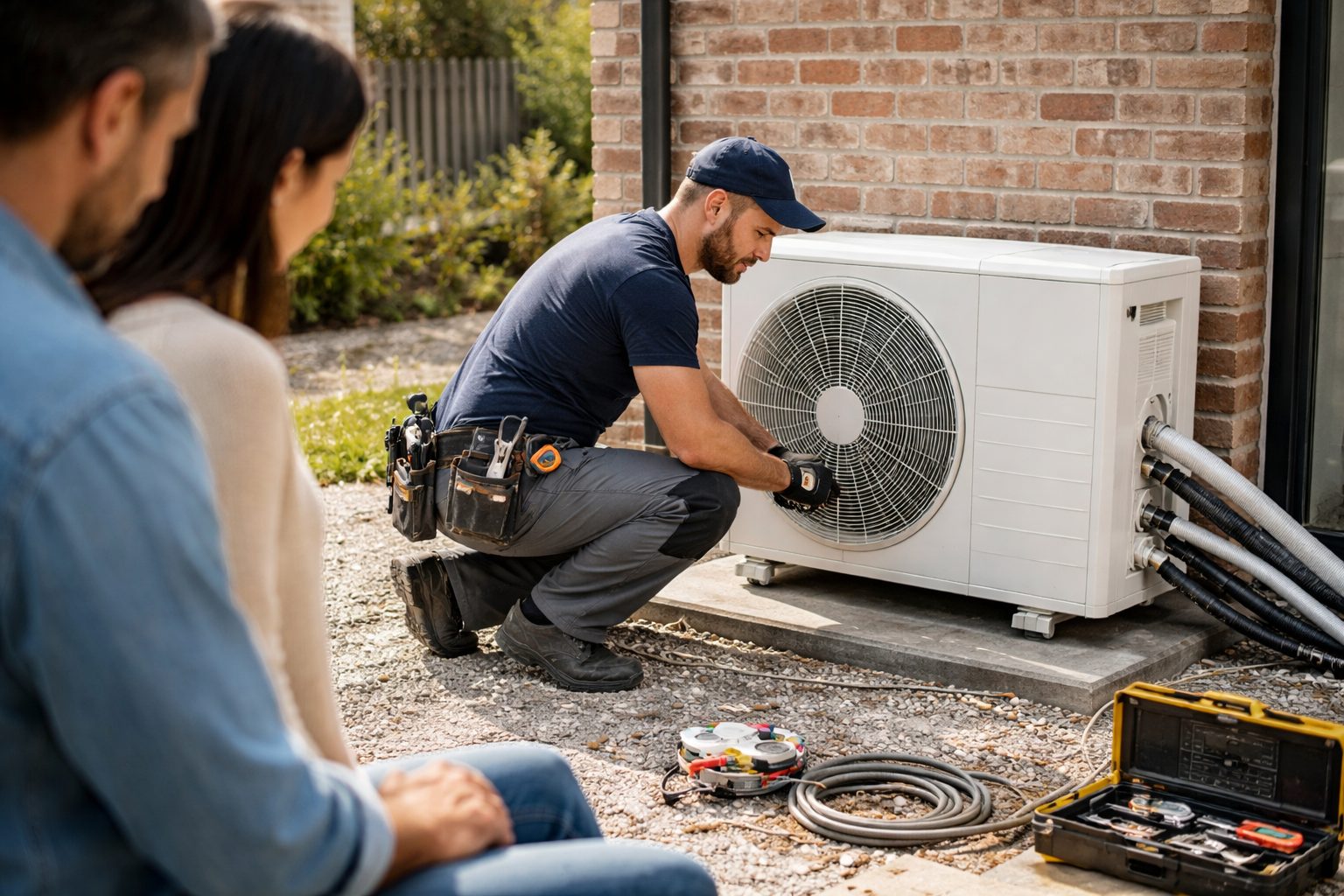
To get a reliable quote you need a proper site survey, accurate heating-loss calculations and at least three written estimates comparing equipment and works. Prepare property information, ask for binding breakdowns and check installer credentials before committing.
Start with a detailed site survey and a heat-loss calculation: a clear brief and three written quotes will normally show true costs and options. Expect survey fees of around £150 to £400 and typical full-install quotes to vary widely by system type and property size.
Why a simple online estimate is usually insufficient
Many online calculators and spreadsheet estimates give a rough idea but miss critical on-site details. Ground conditions, existing heating distribution, loft insulation, room layouts and access for plant all change the scope of work. An installer who bases a quote solely on postal code or floor area commonly underestimates the complexity, which leads to change orders during installation.
Essential steps to secure an accurate quote
Follow these practical steps before you accept an installation quote.
- Arrange a full site survey: check the proposed outdoor unit siting, noise impact, access for drilling or groundworks and any necessary structural changes.
- Request a heat-loss calculation: this should be room-by-room and use current insulation levels, window types and occupancy patterns.
- Audit your existing heating system: note radiators sizes, pipework condition and whether a new hot-water cylinder or buffer tank is required.
- Ask for a written specification: itemised equipment, controls, civil works, electrics and commissioning tasks. Don’t accept a one-line price.
- Check installer competence: ask for demonstrable experience, references, warranties and insurance details. Also verify any relevant accreditation schemes.
What a thorough quote should include
An accurate quote is more than a headline figure. Insist on a breakdown showing:
- Equipment costs: model, capacity (kW) and efficiency performance stated by the installer.
- Installation labour: hours, number of engineers and any subcontracted works.
- Civil and groundworks: trenching, boreholes, dig-and-infill, access scaffolding.
- Alterations to heating distribution: larger radiators, underfloor heating or cylinder replacement.
- Electrical works: new consumer unit, wiring, isolation, and grid connection if required.
- Controls and commissioning: thermostats, smart controls and commissioning tests.
- Exclusions and contingencies: items not included or potential additional costs if unforeseen issues arise.
Typical price and time ranges
The following table gives realistic ranges for installation work. Prices vary by property specifics, access, system type and any required upgrades.
| Work item | Typical cost range | Typical duration | Main variables |
|---|---|---|---|
| Air-source heat pump supply & install | £6,000 to £18,000 | 1 to 4 days | Property size, existing system, outdoor unit siting |
| Ground-source heat pump supply & install | £12,000 to £30,000 | 3 to 10 days (plus groundworks) | Drilling or trenching needs, ground conditions |
| Adding underfloor heating to part of house | £40 to £90/m² | 2 to 5 days per floor (depends on area) | Floor construction, wet or electric UFH, floor coverings |
| Radiator upgrades (per radiator) | £150 to £600 each | 1 to 4 hours each | Radiator size, plumbing access, valve replacements |
Factors that push costs to the higher end include poor access, the need for structural alterations, significant rerouting of pipework, deep boreholes for ground-source systems and extensive electrical upgrades.
Get up to 3 quotes from heat pump installers
Describe your project in a minute. Free, quick and with no obligation.
Request your quote through our platform
Our platform lists 42,621 heating engineers in 1,357 towns.
Compare local firms and get several quotes from a single request — free and with no obligation.
Get a quick quote
- Free and no obligation
- Quotes from installers who cover your area
- Check what grant your installer can claim
- You choose who to hire, if anyone
Thank you — we have received your request!
A local firm will contact you as soon as possible about your free, no-obligation quote.
Choosing between system types and what affects quotes
Your property and budget determine the best technology. An air-source unit often has lower upfront cost and shorter install time; a ground-source system typically has higher initial cost due to groundworks but can be more space-efficient. For smaller properties or extensions, an air-to-air heat pump may be an option for targeted space heating and cooling. If you’re considering a conventional heat pump, compare quotes for air source and ground source systems to see which fits your long-term plans.
Other cost drivers:
- Insulation and fabric efficiency — poor insulation increases required capacity.
- Hot-water demand — large cylinders or high-flow requirements raise equipment costs.
- Electric supply — properties needing a significant electrical upgrade will see higher bills.
- Controls and integration — smart controls and zoning increase quote detail but improve efficiency.
How to compare multiple quotes effectively
When you have three or more written quotes, compare like-for-like as follows:
- Match the quoted system capacities and stated efficiencies.
- Ensure each quote includes the same scope of civils, plumbing and electrical work.
- Check warranty lengths and what they cover — parts only or parts and labour.
- Ask for a payment schedule tied to milestones rather than large upfront deposits.
- Request references or site visits to recent installations by the same installer.
If you want to check potential financial support options, see the official guidance on heat pump grants, then confirm eligibility directly with the issuing authority.
Frequently asked questions
Do I need a survey before getting a quote?
Yes. A site survey and heat-loss calculation are essential for an accurate, binding quote and to avoid unexpected costs during installation.
Can I rely on a single quote from an online company?
No. Use online quotes as initial guidance, but insist on at least one in-person survey and three written quotes to compare properly.
Should I upgrade radiators or use underfloor heating?
It depends on the system size and heat demand. Radiators may need upsizing for lower-temperature heat pumps; underfloor heating improves efficiency but increases upfront cost and installation time.
Conclusion
Get at least three written, itemised quotes based on an on-site survey and heat-loss calculation, then compare scope, warranties and payment terms before deciding. Actionable tip: ask each installer for a final, binding price based on an agreed specification so you can compare like for like.